Chain Link vs. Wood Fencing: Upgrading for Privacy
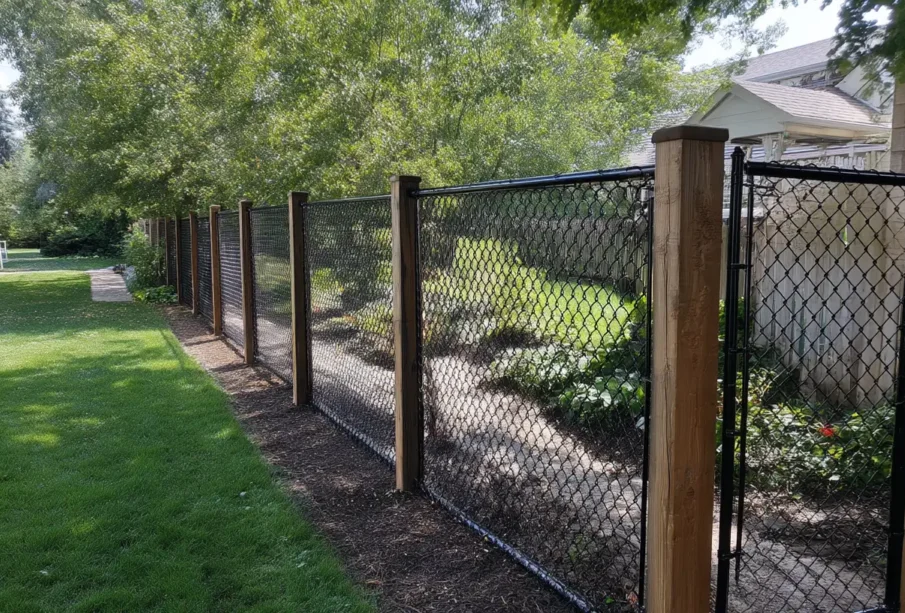
A residential backyard should feel like an extension of your indoor living space—a private zone where you can drink morning coffee in comfortable seclusion, let children or pets roam unattended, and host friends without feeling put on display for the entire neighborhood. For millions of American homes, however, the boundary defining that space is a simple four-foot galvanized chain link fence.
Chain link fencing earned its ubiquity honestly. It is exceptionally durable, impervious to rot, inexpensive to manufacture, and quick to install. It successfully marks property lines and keeps large dogs contained. But when it comes to personal privacy, chain link offers virtually none. Every glance from a neighbor walking their dog, every pass of street traffic, and every lawnmower run across the lot line enters your backyard unchecked.
Deciding to upgrade from chain link to a full wood privacy fence is one of the most transformative exterior renovations a homeowner can undertake. It changes the visual character of the entire property, alters how you experience your outdoor space, and reshapes your neighborhood curb appeal. Making the shift successfully requires understanding how wood fencing functions as an architectural and structural barrier, which lumber species will hold up to regional weather, and whether you can salvage portions of your existing fence framework to cut down on labor and cost.
The Functional Appeal and Privacy Limits of Chain Link
Chain link was never designed to conceal; it was engineered to demarcate. Fabricated from woven, interlocking coated steel wire bent into a diamond pattern and secured to tubular steel terminal and line posts, it excels under structural tension and shrugs off extreme winds that would flatten solid barriers. Because it offers negligible wind resistance, chain link posts rarely heave out of the ground unless frost levels are extreme or footings were poured improperly.
When homeowners feel the itch for more seclusion, their initial instinct is often to retrofit their existing chain link rather than replace it entirely. This usually leads down two paths: decorative privacy slats or woven windscreen fabric.
The Shortcomings of Privacy Slats and Mesh Screens
Privacy slats are narrow strips of high-density polyethylene (HDPE) or aluminum that slide vertically or diagonally through the diamond mesh. While they are relatively affordable and easy to install over a weekend, they rarely deliver the clean, high-end sanctuary homeowners envision:
-
Partial coverage: Because the woven wire has inherent curvature, slats leave continuous vertical gaps. At best, they provide roughly 75 to 85 percent visual blockage, meaning neighbors can still see silhouettes and movement clearly.
-
UV degradation: In regions with intense summer sun, plastic slats eventually oxidize, turn brittle, crack, and fade unevenly.
-
The wind sail effect: Adding slats turns a fence that was 90 percent open space into a semi-solid wall. Standard light-gauge chain link posts—especially thin residential 16-gauge tubing set in shallow concrete—are often not rated to handle the increased lateral wind load, causing the entire fence line to lean after the first major storm.
Commercial mesh windscreens fare little better over time. While they serve a temporary purpose on construction sites, in a residential backyard they tend to sag, trap dirt, tear at the grommet rings, and give the property a makeshift, industrial appearance. If genuine seclusion is the goal, nothing short of a solid vertical barrier will suffice.
Why Wood Delivers True Yard Seclusion
Replacing open steel mesh with a six-foot or eight-foot wood fence fundamentally alters the microclimate and spatial psychology of your yard.
First and foremost is total line-of-sight obstruction. A properly configured wood fence prevents anyone at street level from peering into your patio, bedroom windows, or outdoor dining area. It creates a defined architectural backdrop that frames landscaping, garden beds, and hardscaping elements, turning an exposed parcel into a curated courtyard.
Equally important, though often overlooked, is acoustic buffering. While no lightweight residential fence can completely silence highway roar, solid wood has mass. A dense board-on-board wood fence reflects and absorbs a noticeable portion of high-frequency neighborhood noise—barking dogs, conversational chatter, air conditioner compressors, and passing car tires—dampening ambient sound and making the backyard feel noticeably calmer.
Wood also offers aesthetic customization that manufactured steel cannot match. Whether stained in a rich walnut tone, sealed with a clear natural oil, or painted to complement trim work on the main house, wood brings organic warmth and texture that elevates overall property value.
Selecting the Right Privacy Fence Style
Not all wood privacy fences are constructed the same way. The alignment and overlapping of the individual vertical pickets dictate both the longevity of the privacy and the structural resilience of the panels.
Stockade Dog-Ear
The stockade dog-ear design is the most common and budget-friendly wood privacy fence in the country. Vertical pickets with clipped corners are nailed side-by-side along horizontal 2×4 rails.
While it provides immediate full privacy upon installation, standard lumber shrinks as it cures in the open air. A wet, pressure-treated board measuring 5.5 inches wide can easily lose an eighth to a quarter of an inch of width during its first hot summer. Within six months, side-by-side stockade installations frequently develop consistent sliver gaps between every single board, diminishing visual privacy.
Board-on-Board
For homeowners demanding complete, uncompromising privacy, board-on-board construction is the undisputed gold standard. In this layout, the builder nails down a base layer of vertical pickets with small gaps between them, then covers those gaps with an overlapping second layer of boards.
Because each board overlaps the underlying edge by an inch to an inch and a half, the wood can expand in humid weather and contract during winter dry spells without ever exposing a sightline gap. It also presents a dimensional, shadow-rich facade that looks substantially more luxurious than flat stockade.
Shadowbox
Often referred to as a “good neighbor” fence, the shadowbox style alternates pickets on the front and back faces of the horizontal runner rails.
This design looks identical and finished from both your yard and your neighbor’s property, eliminating disputes over who gets the “smooth” side. Because air can flow freely between the staggered pickets, shadowbox fencing experiences far less wind load during heavy gusts, reducing stress on structural posts. The trade-off is visibility: while it blocks sightlines when viewed dead-on, anyone walking along the fence line at an oblique angle can see through the alternating gaps into your yard.
Horizontal Slat
Modern residential architecture has driven an explosion in horizontal wood fencing. Instead of traditional vertical pickets attached to horizontal stringers, long boards run horizontally between heavy square posts.
When built with tongue-and-groove boards or narrow, uniform spacing, horizontal fencing creates clean, expansive lines that visually lengthen smaller suburban lots. However, horizontal installations require exceptionally straight, high-grade lumber and closely spaced posts (typically six feet on center rather than eight feet) to prevent the long planks from sagging under their own weight or cupping over time.
Lumber Species: Balancing Durability, Aesthetics, and Budget
Choosing the right wood species is a balancing act between initial construction budget and the ongoing cost of preservation. The three dominant species across the American residential market each bring distinct characteristics to the table.
Pressure-Treated Pine
Pressure-treated pine (PT) is the most widely available and economical lumber option, dominating markets across the Midwest, South, and East Coast. Southern yellow pine is kiln-dried and impregnated with chemical copper compounds under high pressure, making it exceptionally resistant to fungal rot, subterranean termites, and boring insects.
The primary challenge with pressure-treated pine is its internal moisture content. The wood is often soaking wet when purchased from the lumberyard. As it dries under the sun, high internal stresses cause standard pickets to twist, warp, bow, and split if they are not securely fastened with ring-shank nails or exterior-grade screws. If you select pressure-treated lumber, allow the wood to dry in place for two to four months before applying a high-penetration exterior stain.
Western Red Cedar
Western red cedar is prized nationwide for its dimensional stability, fine straight grain, and natural resistance to decay. Cedar heartwood contains naturally occurring organic compounds called thujaplicins, which act as natural preservatives against rot and insect attacks without requiring chemical saturation.
Cedar absorbs stains and sealers effortlessly and exhibits minimal shrinkage or warpage compared to pine. It carries a distinctive aromatic scent and weathers gracefully into a soft, silvery-gray patina if left unfinished. The trade-off is cost and density: cedar is a softer wood that dents more easily, and it commands a substantial price premium over treated pine.
Redwood
Predominantly utilized in the Western United States, redwood represents the top tier of native fencing lumber. Like cedar, old-growth and premium architectural grades of redwood contain natural tannins that fend off moisture, rot, and termites naturally.
Redwood features an unmistakable deep cinnamon and auburn coloration, tight vertical grain patterns, and exceptional structural strength. It resists checking and splitting better than almost any domestic softwood. However, sourcing high-grade redwood carries the highest material cost in the industry, making it an investment best suited for permanent luxury renovations.
Structural Retrofitting: Can You Reuse Existing Steel Posts?
One of the largest hidden expenses in building a new wood fence is demolition and post setting. Digging up massive concrete footings, disposing of heavy steel posts, and excavating new holes down to the regional frost line consumes hours of heavy physical labor.
If your existing chain link fence was installed correctly, you may not need to pull the posts out at all. Steel-to-wood conversion brackets allow homeowners and contractors to attach horizontal wood 2×4 rails directly to round, galvanized steel posts.
This hybrid approach offers significant structural advantages:
-
Immunity to ground-contact rot: The number-one point of failure in traditional wood fences is where a 4×4 wooden post enters the concrete footing or soil. Moisture sits on top of the concrete collar, eventually rotting the wood through at the ground line. Galvanized steel pipe eliminates this vulnerability entirely.
-
Massive labor savings: Reusing plumb, firmly set steel posts eliminates the need to rent hydraulic augers, mix dozens of bags of concrete, and haul away tons of dirt and rock.
-
Cleaner yard profile: The steel posts can be completely concealed on the interior side of the fence using boxing boards or hidden behind the picket run.
The critical caveat is verifying post strength. Chain link fence lines typically use smaller 1-5/8-inch or 1-7/8-inch outer-diameter line posts. If you are hanging a six-foot solid wood wall that catches strong wind, those posts must be heavy-gauge steel (Schedule 40) and anchored in solid concrete footings at least 24 to 36 inches deep. If the steel posts wobble by hand or were set with lightweight residential tubing, they must be pulled and replaced with either heavy 2-3/8-inch structural steel pipe or pressure-treated 4×4 or 6×6 wood timbers.
Wind Load and Acoustic Dampening: The Hidden Physics of Solid Barriers
Replacing a porous chain link boundary with an unbroken expanse of wood alters how environmental forces interact with your yard. Chain link allows wind to glide through with virtually no resistance. A solid wood privacy fence, however, acts as a gigantic vertical sail.
In hurricane-prone coastal corridors or the open wind corridors of the Great Plains, wind load calculations cannot be ignored. A 60-mile-per-hour wind gust hitting a solid eight-foot-tall panel generates hundreds of pounds of lateral force. To keep the fence upright year after year:
-
Footing depth should equal one-third to one-half the total height of the above-ground post.
-
Horizontal support rails (stringers) must be spaced evenly: a six-foot fence requires three 2×4 runners (top, middle, and bottom) to prevent pickets from bowing inward or popping off under wind strain.
-
Pickets should clear the bare soil by at least two inches. Bringing wood pickets directly into contact with topsoil or turf traps moisture, accelerates bottom-edge rot, and prevents rainwater from draining freely underneath the fence during heavy downpours.
That same solid construction is what provides acoustic dampening. Sound travels like water, finding any microscopic opening to bypass a barrier. A solid board-on-board fence acts as a sound-deflection screen, pushing local street noise upward and away from your patio seating areas, turning your yard into an insulated, quiet haven.
Maintenance Realities and Long-Term Ownership
While the aesthetic and functional superiority of a wood privacy fence is clear, homeowners must accept the maintenance responsibilities that accompany organic materials. A galvanized chain link fence can sit forgotten in the elements for thirty years with virtually zero attention. Wood, by contrast, requires ongoing stewardship.
Sunlight degrades the surface lignin in natural wood fibers, while seasonal moisture cycles cause wet wood to swell and dry wood to split. To preserve the structural health and rich color of a new wood fence:
-
Apply a penetrating oil-based stain: Avoid thick, latex-based exterior paints or opaque solid stains on vertical fencing. Paint forms a film on the surface of the wood that eventually blisters, cracks, and peels as moisture tries to escape, requiring grueling scraping and sanding before recoating. Semi-transparent penetrating oil stains seep deep into the wood cellular structure, protecting against UV rays and shedding water without creating a surface film that can peel.
-
Re-seal every three to five years: A simple splash test will tell you when maintenance is due. Flick a few drops of water against the fence boards; if the water beads up cleanly, the sealer remains active. If the water soaks immediately into the wood, darkening the grain, the lumber is thirsty for a fresh coat of sealant.
-
Keep vegetation clear: Trim vines, shrubbery, and heavy ornamental grasses away from the face of the fence. Dense plant growth blocks airflow, preventing the wood from drying after storms and accelerating mold and mildew growth.
Upgrading from utilitarian chain link to a well-crafted wood privacy fence is an investment in your everyday quality of life. It takes an exposed, purely functional property border and transforms it into a warm, secluded sanctuary where you can truly relax within the borders of your own land. By pairing thoughtful layout planning with rot-resistant materials and robust post anchors, you build an enduring boundary that protects both your quiet enjoyment and your property’s value for decades to come.