
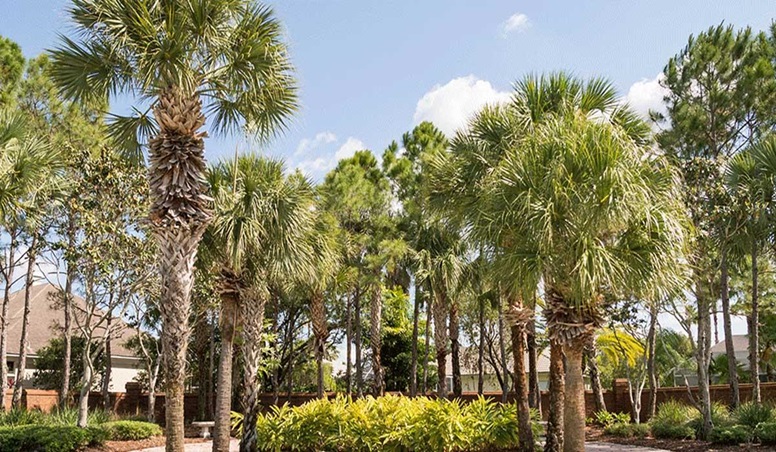
Palm trees and coconuts go together in many people’s minds, especially in Florida. So, do all palm trees grow coconuts? The answer is no. Only one palm species produces true coconuts: the coconut palm. Many other palms flower and fruit, but their fruit looks very different.
Palms are a large plant family with many species. Some, like the date palm, produce fruit people eat. Others make small berries or seeds that birds and wildlife enjoy. Florida’s sabal palm, for example, produces small dark fruit. Queen palms grow clusters of orange fruit that can drop and make a mess on patios and pool decks.
The coconut palm itself grows best in warm, frost-free areas. In Florida, it is most common in the southern parts of the state and along warm coasts. Its heavy nuts can be a real hazard when they fall from a tall tree onto a walkway, car or person. The International Society of Arboriculture notes that coconut palms may need pruning as often as every three to four months to lower the risk from heavy fruit.
For other palms, fruit clusters may still be worth removing when they drop near walkways or pools, or when they create slippery messes. Pruning should be done with care. Removing too many green fronds can weaken a palm, and climbing spikes leave wounds in the trunk that do not close.
Homeowners who are unsure which palms they have can start by looking at the fruit, the leaf shape and the trunk. A local tree care professional can also help identify species and plan safe pruning.
People curious about the palms in their yard can learn more from Arbor Wise Tree Services, a St. Petersburg tree care company that serves Pinellas County. Knowing which palms fruit, and how, helps owners keep their yards safe and tidy.

How Long Does It Take a Professional to Paint a Room?
November 19, 2026

Leave a reply Cancel reply
-

Types of Pavers and Methods of Installation
May 22, 2021 -

How Your Home Can Benefit from Quality Roof Restoration
February 4, 2019 -

5 Smart Strategies for Kitchen Renovation
February 22, 2022
Latest Posts
-

How Long Does It Take a Professional to Paint a Room?
November 19, 2026 -

Do All Palm Trees Grow Coconuts? Fruiting Palms Explained
November 19, 2026 -

Floating Dock Care After a Storm: What Waterfront Owners Should Check
November 19, 2026 -

Garage Door Buying Mistakes to Avoid During a Renovation
November 12, 2026 -

Motorized Screen Ideas for Making Large Openings More Practical
September 30, 2026
Recent Posts
- How Long Does It Take a Professional to Paint a Room? November 19, 2026
- Do All Palm Trees Grow Coconuts? Fruiting Palms Explained November 19, 2026
- Floating Dock Care After a Storm: What Waterfront Owners Should Check November 19, 2026
- Garage Door Buying Mistakes to Avoid During a Renovation November 12, 2026
- Motorized Screen Ideas for Making Large Openings More Practical September 30, 2026